Easy Health Gadgets: Your Guide to Wellness Tech
-

- 11 Dec, 2025
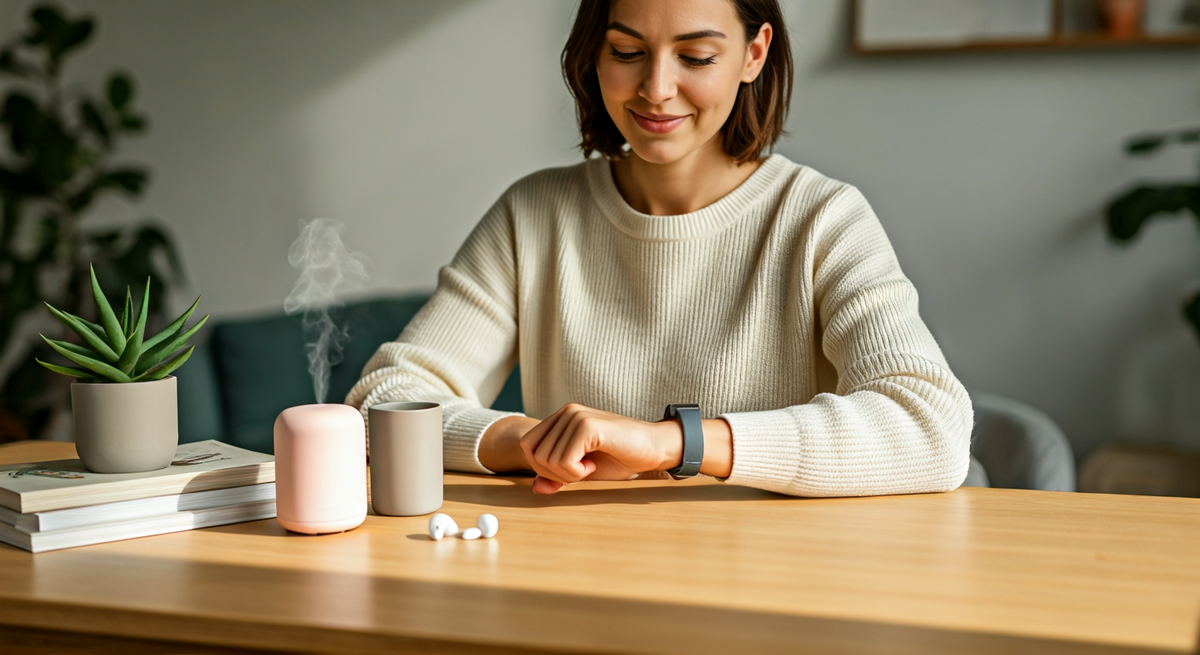
Ever wish you had a simple way to feel a little healthier, but without all the fuss? Maybe you’re curious about what a good night’s sleep really looks like or how much you actually move in a day. That’s where wearable health tech steps in, acting like a friendly little helper right on your wrist or finger. And guess what? You’re not alone! About 35% of adults in the U.S. are already using these devices daily [9].
What Are These Gadgets, Anyway?
Think of wearable gadgets as tiny, smart sidekicks that keep an eye on your body’s daily rhythm. They track things like how many steps you take, how well you sleep, or your heart rate. The goal isn’t to turn you into a data scientist; it’s to give you a simple peek into your daily wellness. The cool part? These little devices can actually nudge you toward healthier habits. Studies show they can increase your daily steps by over 1,200 [4] and even boost your motivation to stay active by 30% [5].
The Different Flavors of Health Tech
- Smartwatches: The All-in-One. These are the versatile superstars, often leading the market [1], keeping tabs on your heart, steps, sleep, and even letting you answer calls.
- Fitness Trackers: The Simple Starter. Great for beginners, these focus on basic activity like steps and general movement.
- Sleep Trackers: The Night Owl’s Friend. Dive deep into your sleep quality, helping you understand your zzz’s better.
- Heart Monitors: The Precision Tool. For those who want more accurate heart rate data, especially during exercise.
- Senior-Focused Tech: Safety & Simplicity. Designed with ease of use and safety features in mind, like fall detection.
Are They Really Worth It?
- PRO: Boosts motivation to move more and feel better.
- PRO: Offers peace of mind, especially with features like fall detection for older adults.
- PRO: Helps you understand your unique body patterns without being a doctor.
- CON: Can sometimes feel like ‘data overload’ if you track everything.
- CON: It’s one more device to remember to charge.
- CON: Accuracy can vary a bit depending on the device and what it’s measuring.
| Category | Best For | Key Features | Good to Know |
|---|---|---|---|
| Smartwatches | General users, seniors, fitness buffs | HR monitoring, ECG, fall detection, sleep, GPS | Comprehensive, can be pricier |
| Sleep Trackers | Focus on sleep quality, recovery | Advanced sleep stages, HR, HRV, body temp, SpO2 | Discreet, may have subscription fees |
| Heart Rate Monitors | Athletes, serious fitness enthusiasts | High accuracy HR, HRV tracking, ANT+/Bluetooth | Best for precise training data, less comfy |
| Fitness Trackers | Beginners, budget-conscious, general fitness | Step counting, HR, sleep, basic activity modes | Affordable, easy to use, basic metrics |
| Personal ECG Monitors | Heart concerns, seniors | Medical-grade ECG readings, AFib detection | Focused solely on heart health, needs phone |
💡 Pro Tip
Your Questions, Answered
Is this data actually accurate?
For tracking trends (like ‘Am I sleeping better this week than last?’), they’re fantastic. For medical-grade precision, some are definitely better than others. For example, chest straps like the Polar H10 are very accurate for heart rate, almost matching an ECG, while a good smartwatch like the Apple Watch isn’t far behind [6].
Are these gadgets hard to set up and use?
Most of these gadgets are designed with ease in mind, linking up to a simple app on your smartphone. Plus, tech specifically made for seniors often prioritizes simplicity to help more people use them comfortably [8]. So, don’t let tech worries hold you back!
Even doctors see the value. As Dr. Glen Stream, Chairman of Family Medicine for America’s Health, noted, these tools have the potential to strengthen the patient-physician connection and improve health outcomes.
So, Which Gadget is Right for You?
The best wearable health gadget isn’t the one with the most bells and whistles; it’s the one that fits seamlessly into your life and helps you meet your wellness goals. Whether it’s a simple step counter or a device that tracks your sleep, the important thing is finding a tool you’ll actually use consistently. The future of these gadgets is looking even more exciting, moving beyond just steps and sleep to help us understand things like our mental clarity and stress levels [quote from Neil Ward]. So, pick a gadget, give it a try, and see how a little tech can make a big difference in your daily wellness!
Sources
- #Wellness tech
- #Health gadgets
- #Easy guide
- #Simple wellness
- #Daily routine
- #Modern convenience
- #Practical technology
- #Stress free tech
- #Simple gadgets
- #Tech made easy
- #Wearable health tech
- #Sleep trackers
- #Heart rate monitors
- #Easy health gadgets
- #Wellness devices
- #Fitness wearables
- #Smart health tools
- #Senior tech
- #Health monitoring
- #Daily wellness