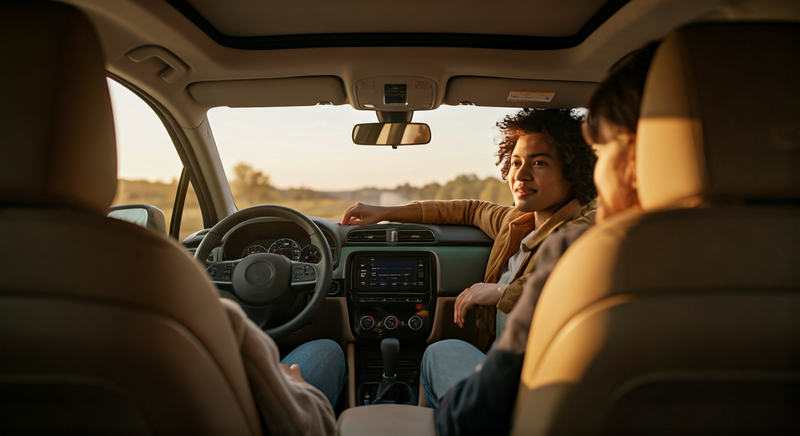
10 Smart Car Tech Features for a Safer, Easier Drive
-

- 27 Nov, 2025
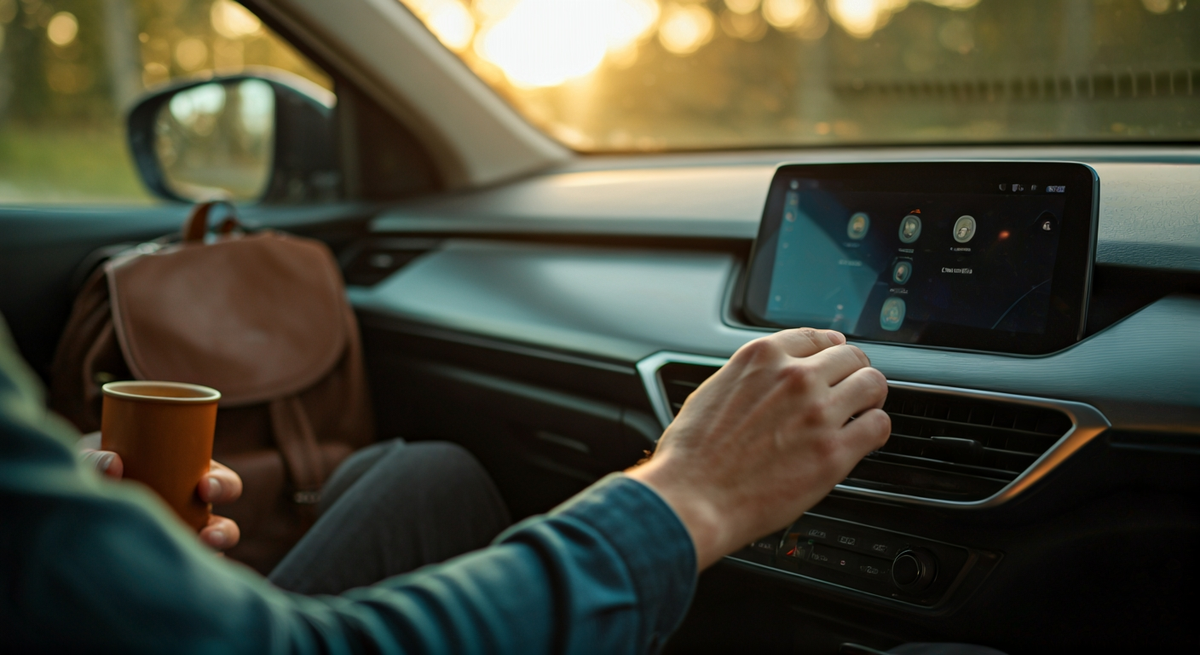
Ever felt a car “hide” in your blind spot, or wished your ride was just a little less stressful? Modern car tech isn’t about fancy gadgets for the sake of it; it’s like having a clever co-pilot along for the ride. These features are becoming common, designed not to complicate things, but to make driving safer, more convenient, and a whole lot calmer. We’re breaking down ten of the most useful, easy-to-understand features that are changing how we drive for the better. Think of it as a toolkit that helps you stay confident and independent on the road.
1. Automatic Emergency Braking (AEB)
Think of AEB as your car’s extra set of reflexes. Using clever sensors, your vehicle constantly watches for potential collisions, especially with the car in front. If you’re heading for trouble and don’t react quickly enough, the system can automatically apply the brakes. This isn’t just a fancy trick; it’s projected to prevent an estimated 28,000 crashes by 2025 [2], which is a pretty big deal, especially in busy traffic.
2. Blind Spot Warning (BSW)
The dreaded blind spot! That little area where a car can disappear just when you’re about to change lanes. BSW is your guardian angel for these tricky spots. A small light, usually in your side mirror, illuminates when there’s a vehicle lurking where you can’t see it. Sometimes, you’ll even get an audio alert if you start to drift over. This simple feature makes highway lane changes much less stressful, reducing lane-change crashes by 14% [2].
3. Lane Keeping Assist (LKA)
Ever find yourself drifting a little on a long drive, maybe just for a second? LKA is like a gentle nudge back in line. It uses cameras to read the lane markings and, if you start to stray without signaling, it can gently steer the car back into its lane. It’s particularly useful on monotonous drives, acting as a helpful backup when your concentration might waver. This tech is estimated to impact 1.12 million crashes annually [2].
💡 Pro Tip
4. Rear Cross-Traffic Alert
Backing out of a busy parking spot can feel like a guessing game. Is someone coming? What about that shopping cart? Rear Cross-Traffic Alert acts like a pair of “eyes in the back of your head,” specifically designed for these scenarios. It warns you with beeps and dashboard alerts if a car, cyclist, or even a pedestrian is approaching from either side while you’re in reverse. It works hand-in-hand with your rearview camera, making those blind exits far less nerve-wracking. By 2028, most cars will have rearview cameras [3], making this tech even more widespread.
5. Adaptive Cruise Control (ACC)
Forget the old, clunky cruise control. Adaptive Cruise Control is its smarter, more relaxed cousin. Instead of just holding a set speed, ACC uses radar and cameras to automatically adjust your car’s speed to maintain a safe distance from the vehicle ahead. Traffic speeding up? Your car speeds up. Traffic slowing down? Your car slows down, even to a full stop in some systems. It drastically reduces driver fatigue in stop-and-go or variable-speed highway traffic, meaning less tapping the brake and resetting your speed.
6. Keyless Entry & Push-Button Start
This one is a simple pleasure, but it makes a big difference. No more fumbling for keys with arms full of groceries or in a pouring rainstorm. With keyless entry, your car detects the fob in your pocket or purse and unlocks the doors automatically. Then, just hop in, put your foot on the brake, and push a button to start the engine. It’s a small convenience, but it adds up to a lot less fuss and a smoother start to every journey.
“The technology that makes cars safer for everyone is arriving just in time to be particularly useful for aging motorists,” noted AAA spokesman Michael Green, emphasizing the importance of mobility for mental health and independence [8].
7. Rearview Cameras
While not exactly ‘new’ tech anymore, rearview cameras are standard on all new cars for a very good reason. They give you a clear view of what’s directly behind your vehicle, eliminating that notorious blind spot. This is incredibly helpful for parallel parking, backing into tight spaces, and ensuring no small children or pets are behind your car. The on-screen guidelines even make it easier to judge distances and line up perfectly. By 2028, about 76% of all registered vehicles will be equipped with them [3].
8. Wireless Phone Charging Pads
Tangled cables? Forgotten chargers? The wireless charging pad solves that mess. If your phone is compatible, you simply place it on the pad in your console, and it starts charging – no cords needed. This small but mighty convenience declutters your car and ensures your phone is always ready for navigation, emergencies, or just keeping the grandkids entertained. A 2023 study found that 48% of new vehicle buyers wanted this feature [4], proving it’s no longer just a nice-to-have.
9. Hands-Free Voice Commands
Consider this your personal on-board assistant. With a simple voice command, you can make calls, send texts, change the radio station, or input a destination into your GPS. The primary benefit here is undeniable: it keeps your hands on the wheel and your eyes on the road. This significantly reduces distractions, making every drive safer for you and everyone around you, regardless of age.
ⓘ Smart Move
10. The AI-Powered Future of Driving
All the sensors, warnings, and assists we’ve discussed are building blocks for an even smarter future. Artificial Intelligence (AI) is the ‘brain’ connecting these features, allowing your car to make incredibly quick decisions. This isn’t about scary ‘robot cars,’ but rather the ultimate co-pilot, working tirelessly to prevent accidents entirely. “Smart car technology is making roads exponentially safer by removing the weakest link – the human driver,” stated Carla Bailo, an expert in mobility research [6], noting that humans are responsible for 94% of crashes [6]. The future promises an even safer, easier driving experience.
Key Takeaways
- Today’s car tech is a friendly co-pilot, not a complex computer.
- Safety features like AEB and Blind Spot Warning are proven to reduce crashes.
- Convenience tech like Adaptive Cruise Control and wireless charging reduces stress and clutter.
- These features are especially helpful for maintaining driving independence and safety for older adults.
- Don’t be afraid to ask for a demonstration to learn how to use these helpful tools.
Final Thoughts
At its core, smart car tech is about empowerment. It’s not about replacing the driver, but about giving us better tools to navigate the road safely and confidently. These features form a comprehensive toolkit, as Dr. Julie Gandolfi suggests, giving us the opportunity to drive safely for longer than previous generations [7]. Embracing this technology means enjoying a safer, more comfortable, and less stressful time behind the wheel, keeping you independent and enjoying the open road for years to come.